Non-Surgical Hair Restoration: Is PRP or PRF Therapy the Answer for Thinning Hair?
Hair thinning often becomes noticeable during everyday routines. Many Brooklyn residents realize something has changed while rinsing shampoo and seeing more strands collect in the drain. Others notice their hairline looks lighter or their part appears wider than it used to. That moment leads many people to search for real medical solutions before the thinning progresses further.
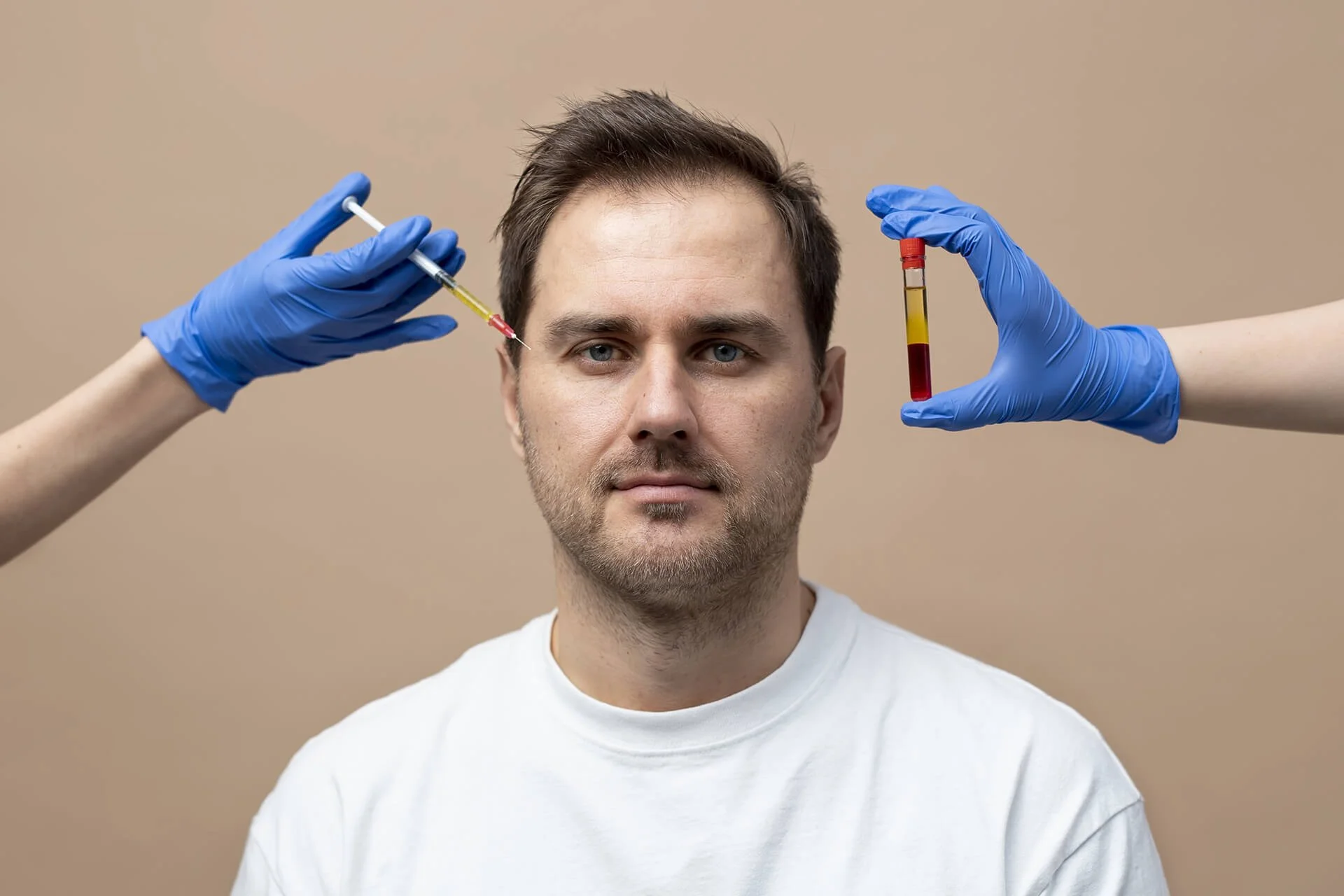
At LY Aesthetics, patients often arrive with the same concern. They want a treatment that restores hair without surgery. Regenerative medicine now provides that possibility through platelet-based therapies. Platelet-Rich Plasma (PRP) and Platelet-Rich Fibrin (PRF) use growth factors drawn from a small blood sample to stimulate dormant follicles. Physicians inject those growth factors directly into the scalp. The biological goal focuses on one process: encouraging follicles that sit in the resting stage to re-enter the growth phase. Timing remains essential. A follicle that has permanently scarred cannot produce hair again, which makes early treatment important.
PRP vs. PRF for Hair Restoration: The Technical Difference
If you’re researching PRF vs. PRP for thinning hair, you probably want to understand what exactly happens inside the scalp during treatment. What they have in common is that both therapies use platelets taken from the patient’s own blood. These platelets contain growth factors that trigger tissue repair and stimulate inactive hair follicles. Now, let’s talk about the differences.
PRP therapy begins with a small blood sample placed in a high-speed centrifuge that separates platelet-rich plasma from other blood components. The resulting plasma delivers a concentrated burst of growth factors through injections across thinning areas. Clinics offering PRP for hair loss often recommend this method because it quickly stimulates follicle activity.
PRF therapy uses a slower centrifuge cycle that preserves additional cells and forms a fibrin matrix. That structure keeps growth factors active in scalp tissue for several days. Dermatologists often recommend PRF hair restoration NYC for more widespread thinning.patients
Key biological differences include:
PRP releases growth factors rapidly
PRF forms a fibrin matrix in the scalp
PRF releases growth signals gradually for about a week
Both treatments use the patient’s own blood components
The "Rule of Thumb" Hair Density Table
Hair loss progresses through several stages, and each stage responds differently to regenerative therapy. Dermatologists at LY Aesthetics examine follicle density under magnification during consultation. That evaluation allows physicians to recommend the treatment approach most likely to restore hair growth.
| Hair Concern | Recommended Treatment | Why |
|---|---|---|
| Early Thinning | PRP Therapy | Rapid growth factor stimulation for active follicles |
| Postpartum Shedding | PRP Scalp Injections | Supports recovery during hormonal changes |
| Moderate Balding | PRF Hair Restoration | Gradual release of growth factors strengthens weakened follicles |
| Advanced Receding | PRP + PRF Combination | Increased regenerative stimulation across thinning scalp |
Consultations involving scalp PRP injections Brooklyn professionals follow a structured diagnostic process. Physicians evaluate scalp condition, hair density, and medical history before building a treatment plan.
Physicians evaluate several clinical indicators before recommending a regenerative treatment plan. Hair density across the crown and hairline provides the first reference point, since reduced density often signals early follicle stress. Magnified scalp analysis then reveals the degree of follicle miniaturization, which helps determine how much biological stimulation the follicles require. Doctors also review the patient’s history of shedding or hormonal changes because events such as postpartum recovery or stress-related hair loss influence treatment response. Examination of the scalp itself also matters. Signs of inflammation or mineral buildup caused by hard water can weaken follicle activity and affect hair growth.
Early thinning generally responds well to PRP therapy because follicles remain biologically active. Moderate thinning often benefits from PRF hair restoration because the slow release of growth factors supports fragile follicles over several days. Advanced thinning sometimes requires a combination of PRP and PRF to deliver broader biological stimulation.
One principle guides treatment at LY Aesthetics. Regenerative therapy depends on living follicles. Scarred follicles cannot regenerate hair.
Why Brooklyn Residents Prefer PRP Over Hair Transplants
Brooklyn professionals face daily conditions that influence scalp health. Stress levels remain high across the city. Hard water common in many New York buildings deposits minerals along the scalp and weakens hair strands. Environmental stress compounds these factors and increases shedding.
Patients researching PRP clinics often consider surgical hair transplants before learning about regenerative therapies. Hair transplantation remains an option in advanced cases, yet the procedure requires recovery time and carries surgical costs that many find difficult to justify.
PRP therapy appeals to many Brooklyn residents because the treatment integrates easily into a busy schedule.
Key reasons patients choose PRP therapy include:
Treatment sessions usually take about one hour
Most patients return to work the same day
No surgical graft scars appear on the scalp
Recovery involves minimal redness that fades quickly
Cost also influences the decision. Hair transplantation often exceeds fifteen thousand dollars once graft numbers increase. Regenerative therapy provides a more accessible option while preserving existing follicles.
Physicians at a trusted PRP hair clinic Brooklyn residents rely on recommend early treatment. LY Aesthetics emphasizes prevention and follicle preservation because platelet therapy works best when follicles remain viable. Waiting allows follicle damage to progress and reduces the effectiveness of regenerative treatment.
What to Expect: The 4-Month PRP Journey
Hair restoration through platelet therapy develops gradually because follicle biology operates on a growth cycle. Patients who begin PRP for hair loss Brooklyn treatments often notice changes in stages rather than immediately after the first session.
A typical treatment program follows this timeline:
Month One: Active shedding begins to decrease. Patients notice fewer strands in the shower or on pillows.
Month Three: Small new hairs appear across thinning areas. Dermatologists call these early strands vellus hairs. Their presence signals follicle reactivation.
Month Four to Six: Hair shafts increase in thickness as follicles produce stronger strands.
Dermatology research supports these results. A study examining the clinical efficacy of PRP for androgenetic alopecia documented improvements in hair density after platelet therapy.
Maintenance therapy helps sustain those improvements. Patients often return for follow-up sessions several times each year.
Urban environments introduce continuous stress on scalp health. Maintenance treatments at LY Aesthetics help strengthen follicles and maintain growth cycles.
PRP therapy stimulates follicles that remain alive. Follicles that have scarred permanently cannot produce hair again, which reinforces the importance of early treatment.
Conclusion
Hair thinning develops gradually, yet the biological process behind it follows a clear progression. Follicles weaken, hair strands grow thinner, and the growth cycle slows. Early intervention allows regenerative medicine to interrupt that process before permanent damage occurs.
Platelet therapies provide a medical solution grounded in the body’s natural healing mechanisms. PRP introduces concentrated growth factors that stimulate follicle activity. PRF provides sustained regenerative signals through a fibrin-based release system.
At LY Aesthetics, physicians evaluate follicle viability, scalp condition, and patient history before recommending treatment. Every consultation focuses on restoring follicle function and protecting long-term hair density.
The most important factor remains timing. Living follicles can respond to regenerative therapy. Scarred follicles cannot produce new hair.
Stop the shedding and start growing. Book your Brooklyn PRP Hair Consultation at LY Aesthetics.
FAQ
-
Most dermatology protocols recommend three to four sessions spaced about four weeks apart. Physicians then evaluate follicle response before planning maintenance therapy. Patients often continue treatments several times each year.
-
Diffuse thinning in women often responds well to PRF therapy because the fibrin matrix supports gradual growth factor release across the scalp.
-
Most clinics apply topical numbing cream before treatment. Cooling devices may also reduce sensitivity during injections. Patients receiving scalp PRP injections Brooklyn physicians perform generally report mild pressure during the procedure.
-
Dermatologists recommend the “Rule of 24.” Patients wait twenty-four hours before washing their hair so injection sites can close properly and growth factors remain active within scalp tissue.
-
Costs vary across clinics depending on the number of sessions included in the treatment plan. Many practices offer packages that reduce the per-session price. Early investment in regenerative therapy often prevents the significantly higher expense associated with surgical hair transplant procedures later in life.